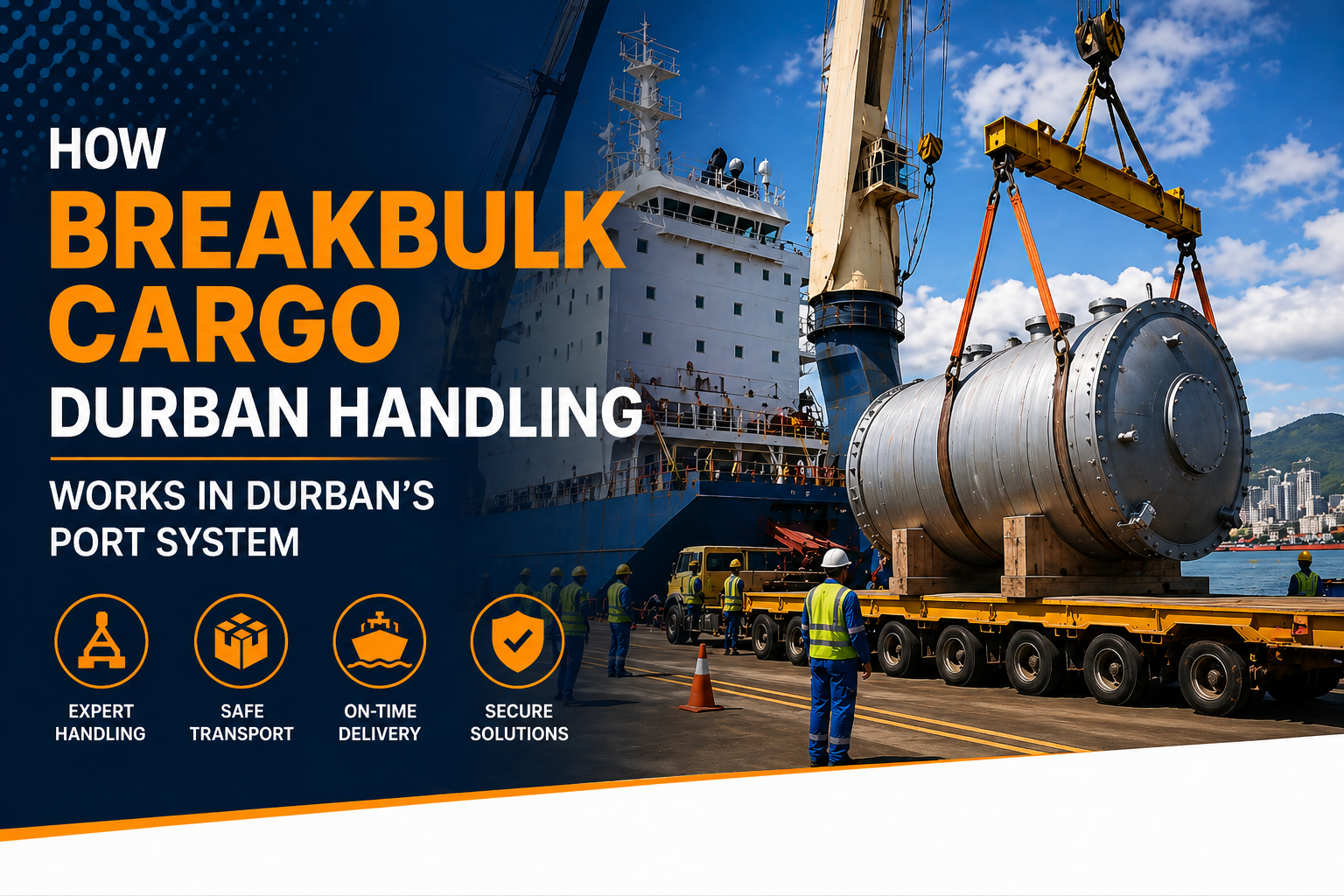
Durban is one of Africa’s busiest and most strategically important ports, handling a wide range of cargo types every day. Among these, breakbulk cargo plays a critical role in supporting industries that rely on transporting oversized, heavy, or non-containerized goods. Understanding how breakbulk cargo handling in Durban works is essential for businesses involved in construction, manufacturing, energy, and infrastructure projects across South Africa.
This guide explains how breakbulk cargo is managed within Durban’s port system, including processes, benefits, challenges, and best practices to ensure smooth logistics operations.
Breakbulk cargo in Durban is handled through specialized port processes that involve manual loading, cranes, and customized logistics planning. It is ideal for oversized or heavy goods that cannot fit in standard containers, which require expert coordination, specialized equipment, and documentation to ensure safe and efficient delivery.
Why It Matters
Breakbulk cargo handling is essential because not all goods can be shipped in containers. Large machinery, industrial equipment, steel structures, and project cargo often exceed standard container dimensions. Durban’s port system is equipped to manage such shipments efficiently, making it a key logistics hub for South Africa and neighboring regions.
For businesses, proper handling of breakbulk cargo ensures reduced risk of damage, timely delivery, and cost efficiency. Poor handling, on the other hand, can lead to delays, increased expenses, and operational disruptions.
What Is Breakbulk Cargo?
Breakbulk cargo refers to goods that are transported individually rather than in containers. Each item is loaded, handled, and secured separately. This type of cargo includes:
- Heavy machinery
- Construction materials
- Steel and metal products
- Industrial equipment
- Large vehicles and parts
Unlike containerized shipping, breakbulk requires specialized handling techniques and equipment.
Types of Breakbulk Cargo Handling in Durban
Durban port offers multiple handling methods depending on the cargo type and requirements.
1. Crane Handling
Large cranes are used to lift heavy and oversized cargo from ships to docks. This is common for industrial equipment and machinery.
2. Roll-On/Roll-Off (RoRo)
Vehicles and wheeled cargo are driven directly on and off vessels, reducing handling time and risk.
3. Sling and Hook Operations
Cargo is lifted using slings or hooks for items that require careful positioning.
4. Manual Handling Support
For smaller breakbulk items, manual labor is used alongside machinery to ensure safe movement.
Each method is selected based on cargo size, weight, and fragility.
Applications of Breakbulk Cargo in South Africa
Breakbulk cargo plays a vital role across several industries:
Construction Industry
Transporting heavy construction equipment, steel beams, and building materials.
Energy Sector
Moving turbines, generators, and power plant components.
Mining Industry
Shipping large mining machinery and equipment.
Manufacturing
Handling oversized industrial machines and production units.
These industries rely heavily on efficient breakbulk cargo services from Durban to maintain operations.
Benefits of Breakbulk Cargo Durban Handling
Flexibility in Shipping
Breakbulk allows the transportation of goods that cannot fit into containers, making it highly versatile.
Cost Efficiency for Large Cargo
For oversized shipments, breakbulk can be more economical than modifying cargo to fit containers.
Reduced Handling Constraints
No need to dismantle large equipment, which saves time and reduces risk.
Access to Specialized Port Facilities
Durban port offers advanced equipment and infrastructure designed for heavy cargo.
Supports Project Logistics
Ideal for large-scale projects requiring multiple oversized shipments.
Breakbulk vs Container Shipping
| Feature | Breakbulk Cargo | Container Shipping |
| Cargo Type | Oversized, heavy | Standard goods |
| Handling | Manual + cranes | Automated systems |
| Cost | Variable | Standardized |
| Flexibility | High | Limited |
| Risk | Higher if unmanaged | Lower |
Breakbulk cargo is the preferred option when cargo dimensions exceed container limits.
How to Choose the Right Breakbulk Cargo Handling Partner
Choosing the right logistics partner is critical for successful cargo handling.
1. Experience in Breakbulk Handling
Look for companies with proven expertise in managing oversized and heavy cargo.
2. Strong Port Network
A partner with established connections at Durban port ensures smoother operations.
3. Proper Equipment and Resources
Ensure access to cranes, forklifts, and specialized tools.
4. Compliance and Documentation
Accurate paperwork is essential to avoid customs delays.
5. End-to-End Services
Choose a provider that offers complete logistics solutions from pickup to delivery.
For a deeper understanding of common logistics challenges, you can read about the problem with logistic.
Common Mistakes in Breakbulk Cargo Handling
Poor Planning
Lack of preparation can lead to delays and increased costs.
Incorrect Packaging
Improper packaging increases the risk of damage during handling.
Ignoring Port Regulations
Failure to comply with port rules can result in shipment hold-ups.
Choosing Inexperienced Providers
Handling breakbulk cargo requires expertise; inexperienced providers can cause serious issues.
Underestimating Costs
Breakbulk handling involves multiple cost factors that must be planned.
Tips and Best Practices
Plan in Advance
Proper planning ensures smooth cargo movement and avoids delays.
Use Proper Packaging
Secure and protect cargo to minimize damage risks.
Work with Experts
Choose experienced logistics providers familiar with Durban port operations.
Ensure Documentation Accuracy
Complete and correct paperwork speeds up customs clearance.
Monitor Shipments
Track cargo regularly to stay informed and avoid surprises.
If you are planning shipments, this guide on how to import goods through Durban port can help.
How Durban Port Handles Breakbulk Cargo Step-by-Step
- Cargo Arrival at Port
- Inspection and Documentation
- Allocation of Handling Equipment
- Loading/Unloading Using Cranes or RoRo
- Storage at Port Facility
- Customs Clearance
- Final Dispatch to Destination
This structured process ensures efficiency and safety throughout the logistics chain.
Conclusion
Breakbulk cargo handling in Durban is a critical part of the logistics ecosystem in South Africa, especially for industries dealing with oversized and heavy goods. Durban Port’s advanced infrastructure and specialized handling processes make it a reliable hub for managing complex shipments.
By understanding how breakbulk cargo works and following best practices, businesses can reduce risks, control costs, and improve operational efficiency. For reliable and professional logistics support, Dare Freight Services provides expert solutions tailored to your shipping needs.
FAQs
What is breakbulk cargo in Durban port?
Breakbulk cargo refers to non-containerized goods that are handled individually using cranes and specialized equipment at Durban port.
Why is breakbulk cargo important in South Africa?
It supports industries like construction, mining, and energy by enabling the transport of oversized and heavy equipment.
How is breakbulk cargo handled in Durban?
It is handled using cranes, RoRo systems, and manual support, depending on the cargo type.
Is breakbulk shipping more expensive than container shipping?
It can be more cost-effective for oversized cargo, but it varies based on handling requirements.
What industries use breakbulk cargo services?
Construction, mining, manufacturing, and energy sectors commonly use breakbulk logistics.
How can I ensure safe breakbulk cargo handling?
Work with experienced logistics providers, use proper packaging, and ensure accurate documentation.
1 Comment
333985.com
Enjoy every single day